Everything you need to know — from the first proposal to Universal Studios, the human cost, and what happens next.
Where It All Began
The idea of reconnecting Oxford and Cambridge by rail is not a new one.
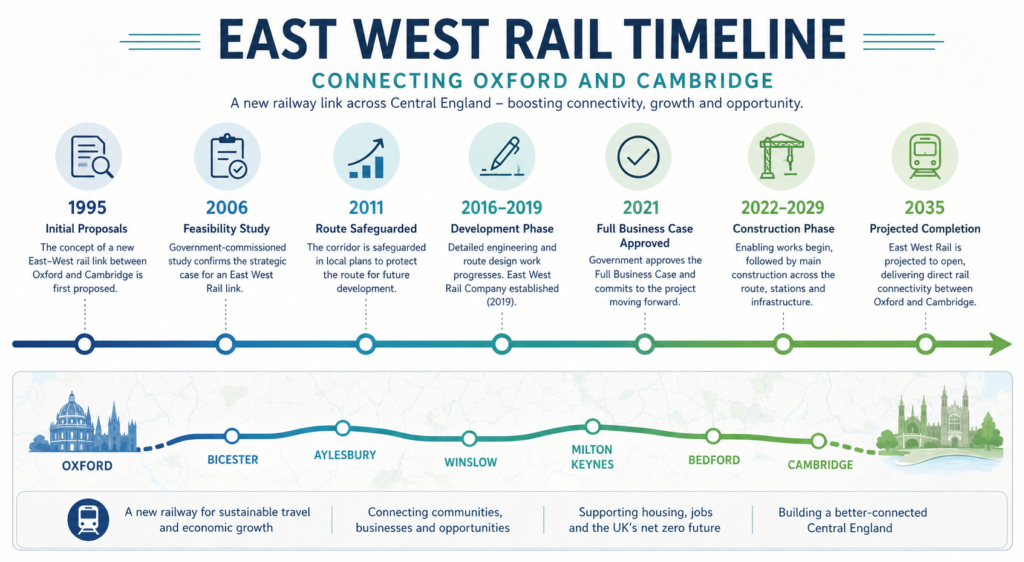
In fact, the original Varsity Line — as it was once known — ran between the two cities until its controversial closure in 1967. For decades, the route sat dormant. Then, in 1995, the East West Rail Consortium was formed. It brought together local authorities and partners who wanted to support job creation and economic growth, new homes and better access to the national rail network.
Progress, however, was painfully slow.
It wasn’t until 2017 that the East West Railway Company (EWR Co) was formally established as a government body to oversee delivery of the project. Since then, the railway has been built in stages — and the ambition behind it has grown considerably.
The Route and What It Involves
East West Rail is not simply one new line. It is a phased reconnection of an entire east-to-west corridor across England.
The Oxford–Cambridge region is one of the UK’s most productive areas, generating over £143 billion a year and supporting around two million jobs, many in high-skill industries.
With world-leading universities and major research centres, it is a hub for innovation and investment. But the region’s potential is held back by poor east-west transport links. Many rail journeys currently require travelling via London, roads are congested, and connections between key towns and cities are slow.
East West Rail directly addresses that problem. The three connection stages are structured as follows:
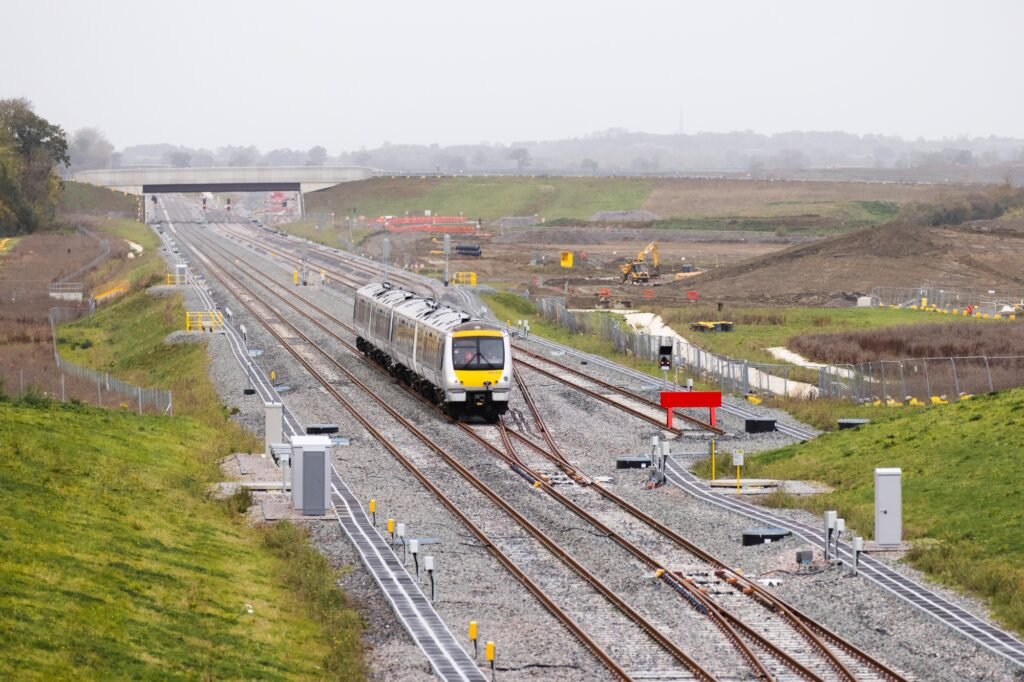
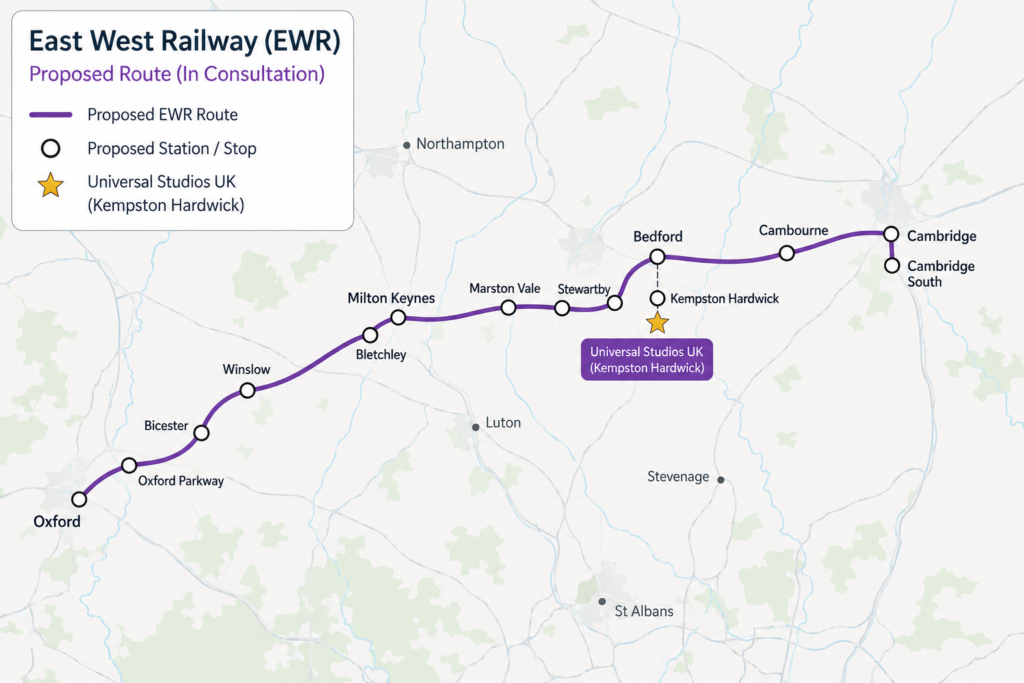
- First Stage: covers Oxford to Milton Keynes via Bicester — and construction on this section was completed in 2024, with freight services beginning in June 2025.
- Second Stage: upgrades the existing Marston Vale Line between Bletchley and Bedford.
- Third Stage: is the most complex — a brand new section of railway between Bedford and Cambridge, which has never existed in its current proposed form.
How Universal Studios Changed Everything
For years, East West Rail moved forward as an important but largely regional infrastructure project. Then, in December 2023, everything shifted.
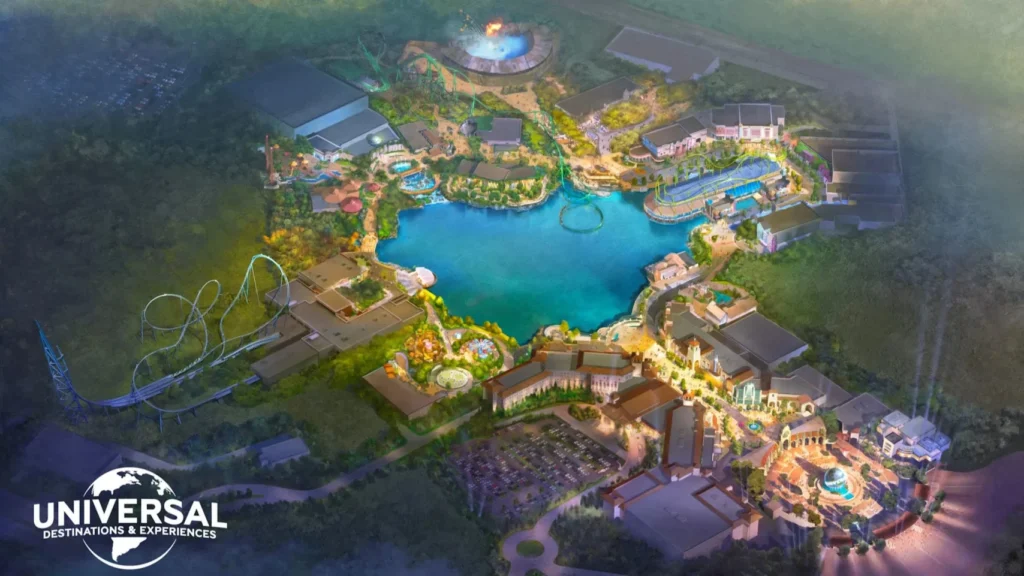
Comcast NBCUniversal announced its intention to build its first Universal-branded theme park and resort in Europe, located in Bedford. See post here. The planned resort near Kempston Hardwick is expected to attract more than eight million visitors in its first year alone.
Suddenly, the stakes were incomparable.
The planned site is bordered to the north-east by the East West Main Line, with proposals including a new station to replace Kempston Hardwick and an expanded Wixams station to further broaden visitor access. In short, the railway runs directly through the heart of the resort’s transport strategy.
EWR Co chief executive David Hughes confirmed the project had been re-sequenced in direct response to the scale of demand expected from the Universal resort. Earlier plans for a single slow train per hour between Oxford and Bedford by 2030 were dropped after discussions with Universal.
The updated proposals are far more ambitious. Plans now include increasing the proposed frequency of trains from three or four to up to five per hour, providing up to 70% more seating across the route and cutting average waiting times significantly.
Longer five-carriage trains are also planned. Universal’s resort is forecast to generate nearly £50 billion of economic benefit and create around 28,000 jobs and East West Rail is the artery that makes it viable.
The Cost — And How It Keeps Climbing
Major infrastructure projects rarely come in on budget. East West Rail is no exception.
The government committed £760 million in new funding to support the line as an early milestone. Then, in 2025, the Labour government committed to invest an additional £2.5 billion into East West Rail. The total project is now widely referenced as a multi-billion-pound undertaking. Figures of £7 billion have been cited in connection with the full scope of the scheme.
Additionally, £240 million in government investment has been committed specifically to accelerate works on the Bletchley to Bedford section, enabling services between Oxford and Bedford to commence by the end of the decade.
The economic case, supporters argue, justifies every penny. By 2050, East West Rail is expected to boost the regional economy by £6.7 billion every year — and that figure doesn’t even account for the Universal resort multiplier effect.
The Human Cost: Homes, Businesses and Broken Communities
This is where the project becomes deeply personal — and deeply controversial.
The proposed route through Bedford has required compulsory land acquisition and, in some cases, demolition. Bedford Borough Council was left shocked and disgusted after being told East West Rail was proposing to demolish properties in Ashburnham Road — including multiple flats and long-established local businesses.
The situation escalated further. Plans were announced to demolish an additional 53 homes and businesses on Ashburnham Road, including a GP surgery serving around 4,000 patients and the Dom Polski venue — a cherished Polish social club at the heart of Bedford’s Polish community.
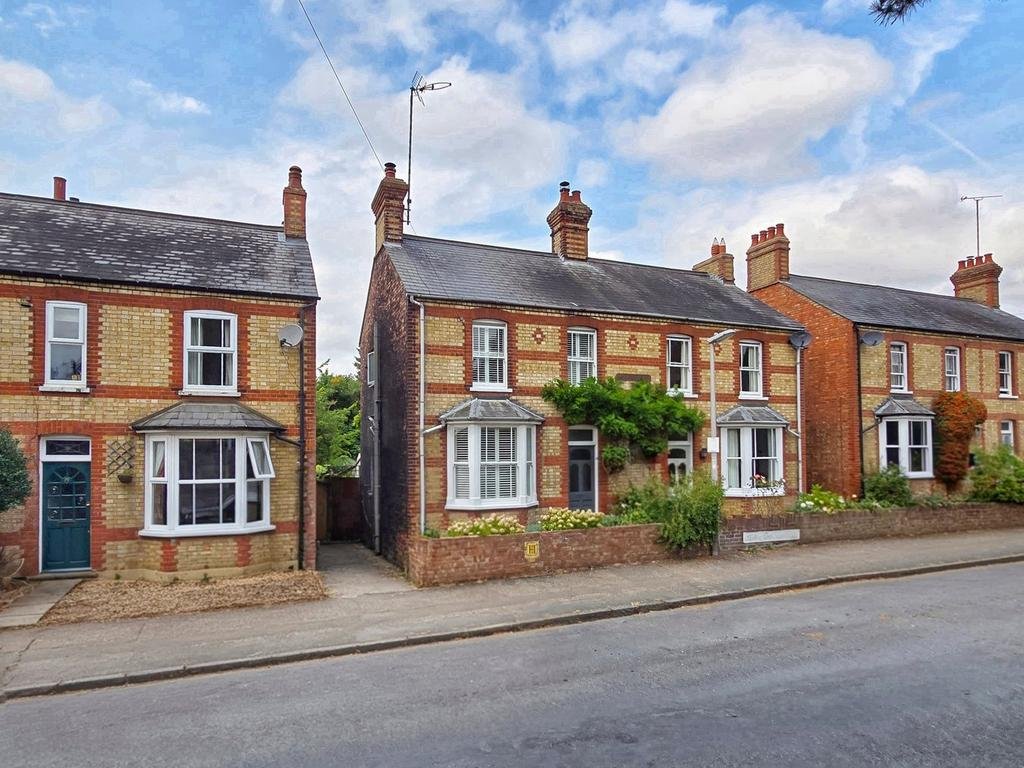
Meanwhile, the Poets area of Bedford — where streets carry names like Spenser Road, Milton Road and Sidney Road — has also been acutely affected. Four generations of families living in terraced houses in the Poets area now face an uncertain future, with posters reading ‘Protect Poets: Save Our Homes’ visible in windows across the neighbourhood.
East West Rail indicated that if it cannot demolish some of the homes in question, it could extend the construction programme by a further two to three years. Bedford Borough Council pushed back firmly, refusing to accept that residents should bear the cost of planning shortfalls.
The financial compensation offered to affected residents has itself been widely criticised. The compensation scheme has been described as inadequate, with many residents feeling the financial arrangements fail to recognise the loss of multigenerational community ties.
When Will It Be Completed?
The timeline for East West Rail spans several phases and stretches well into the 2030s.
The Bletchley to Bedford section is planned to open by 2030, and Bedford to Cambridge by an estimated 2035. EWR Co’s own strategy director has stated he has never been more confident the full line will be completed by the mid-2030s.
However, delays have already occurred. Passenger services between Oxford and Milton Keynes Central were to begin in the latter half of 2025, but a dispute with the rail unions over driver-only operation has continued to prevent commencement of the service.
As for the Universal Studios connection — rail upgrades designed to support the resort are being brought forward but will not be ready in time for its planned opening. Initially, Universal plans to transport visitors via shuttle services from nearby hubs like Milton Keynes, with trains expected to begin serving the park within its first few years of operation.
The Consultation: What Happens Next?
The current consultation — running until 9 June 2026 — is the final opportunity for communities to shape the design before the formal planning application is submitted.
EWR’s anticipated next stages are: January 2027 — submission of the Development Consent Order (DCO) application to the Planning Inspectorate, followed by a post-submission examination period. After examination, a decision is made by the Secretary of State.
If it goes ahead…
Construction on the Bedford to Cambridge section — the most complex and controversial — would begin in the late 2020s.
Communities along the route would face years of construction disruption. However, the economic rewards would be transformative. East West Rail has the potential to support up to 100,000 new homes, connecting communities with improved access to employment, training and education.
For Bedford in particular, the combination of the railway and Universal Studios would place the town at the centre of one of the most significant economic zones in the UK.
If it doesn’t go ahead…
The likelihood of the project being cancelled entirely is considered extremely low. It carries full government backing, billions in committed funding and is tied inextricably to the Universal resort — itself a nationally significant investment.
However, elements of the route could change. EWR’s chief executive has acknowledged that while over 80 design changes were made following its previous consultation, accommodating every piece of feedback would result in a very strange railway.
Meaningful route changes — particularly around Bedford — remain unlikely. What the consultation can influence is detailed design, mitigation measures, station layouts and how construction disruption is managed.
The risk of inaction is arguably greater than the risk of the project itself. Without the railway, the Universal resort faces significant access challenges, the Oxford–Cambridge growth corridor remains fractured, and the economic potential of the region goes unrealised.
The Bottom Line
East West Rail is more than a railway. It is a defining chapter in Bedford’s story.
It brings genuine promise — faster connections, thousands of jobs, and a front-row seat to one of the most exciting leisure developments Europe has ever seen. But it also brings real pain — demolished homes, disrupted communities, and a consultation process that many residents feel does not go far enough.
The deadline to have your say is 11:59pm on 9 June 2026.
Visit eastwestrail.co.uk to respond, or contact EWR Co directly at contact@eastwestrail.co.uk / 0330 134 0067.
More updates to follow as the story develops. See my previous post regarding the consultation updates
Sources: East West Rail Co, Bedford Borough Council, Gov.uk, Network Rail, Wikipedia (East West Rail), Bedford Independent